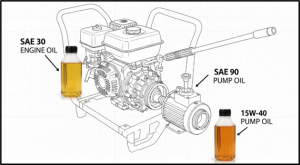
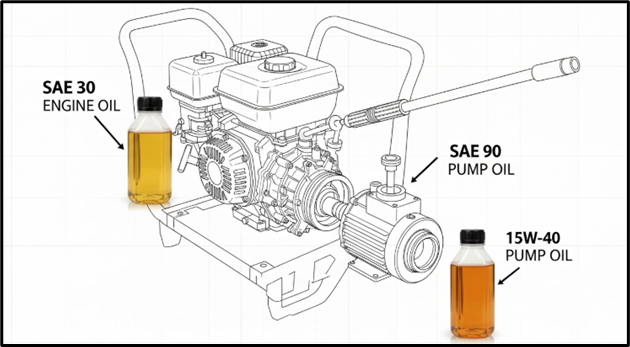
Choosing the right oil for your pressure washer is one of the most important steps in maintaining performance, extending lifespan, and preventing costly repairs. Whether you’re a homeowner or a professional, understanding what kind of oil does a pressure washer use can make a significant difference in how efficiently your machine runs.
This complete guide breaks down everything you need to know from engine oil types to pump oil requirements so you can make the right choice with confidence.
Short Answer – What Kind of Oil Does a Pressure Washer Use?
- Most gas pressure washers use SAE 30 engine oil
- In colder temperatures, 5W-30 or 10W-30 may be used
- Pressure washer pumps use non-detergent pump oil
- Always check the manufacturer’s manual before adding oil
- Engine oil and pump oil are not the same
Understanding Pressure Washer Oil Types
Engine Oil vs Pump Oil – What’s the Difference?
Understanding the difference between engine oil and pump oil is essential:
- Engine oil lubricates the internal components of the motor, reducing friction and heat.
- Pump oil lubricates the pressure washer pump, ensuring smooth water flow and pressure consistency.
- Pump oil is typically non-detergent, meaning it does not contain additives that suspend contaminants.
- Engine oil is usually detergent-based, designed to keep engine components clean.
Using the wrong type in either system can lead to serious damage.
Why Using the Correct Oil Matters
According to professionals at Stegmeier Pressure Washing, using the wrong oil is one of the most common reasons pressure washer pumps and engines fail prematurely.
- Prevents overheating during operation
- Extends engine and pump lifespan
- Protects seals and internal components
- Maintains consistent pressure output
- Prevents rust and internal corrosion
Incorrect oil can reduce efficiency and cause premature failure.
What Kind of Oil Does a Pressure Washer Use for the Engine?
What Kind of Oil Does a Pressure Washer Use in Different Temperatures?
Temperature plays a major role in oil performance:
- Warm weather: SAE 30 is ideal due to its stable viscosity at higher temperatures
- Cold weather: 5W-30 flows better in low temperatures, making startup easier
- All-season use: 10W-30 offers balanced performance across varying conditions
- Extreme conditions: Synthetic oils perform better under temperature fluctuations
Choosing oil based on climate ensures optimal engine performance year-round.
Oil Viscosity Explained (SAE Ratings)
Oil viscosity refers to how thick or thin the oil is at certain temperatures.
- SAE 30: Single-grade oil, best for warm climates
- 5W-30: Multi-grade oil, excellent for cold starts
- 10W-30: Versatile and widely used for general conditions
- 15W-40: Thicker oil for heavy-duty or high-load use
What do the numbers mean?
- The “W” stands for winter
- The first number indicates cold temperature performance
- The second number indicates thickness at operating temperature
Correct viscosity ensures proper lubrication and reduces wear.
What Kind of Oil Does a Pressure Washer Use for the Pump?
Non-Detergent Pump Oil Explained
Pressure washer pumps require non-detergent oil, and here’s why:
- Detergent oils trap contaminants, which can damage pump components
- Non-detergent oil allows water and debris to separate
- Provides better protection for seals and pistons
- Improves pump durability and lifespan
Using detergent oil in a pump can lead to contamination and failure.
Signs You Are Using the Wrong Pump Oil
If the wrong oil is used, your pressure washer will show warning signs:
- Pump overheating during use
- Milky or cloudy oil (indicates water contamination)
- Reduced water pressure
- Unusual pump noise
- Seal leaks or damage
Address these signs immediately to avoid costly repairs.
Pressure Washer Oil Types Comparison Table
| Oil Type | Used For | Temperature Range | Detergent or Non-Detergent | Best Use |
| SAE 30 | Engine | Warm weather | Detergent | Summer use |
| 5W-30 | Engine | Cold weather | Detergent | Winter use |
| 10W-30 | Engine | All season | Detergent | Year-round |
| Non-Detergent SAE 30 | Pump | All | Non-Detergent | Pump lubrication |
| Synthetic Oil | Engine | Extreme temps | Detergent | Heavy-duty use |
How to Choose the Right Oil for Your Pressure Washer
Check the Owner’s Manual First
Always start with the manufacturer’s recommendations. Different models may have specific requirements.
Consider Temperature and Climate
Choose oil that matches your working environment to ensure smooth operation.
Choose Correct Oil Viscosity
Viscosity directly affects lubrication and engine efficiency.
Make Sure Pump Oil Is Non-Detergent
Never use detergent oil in the pump system.
Never Mix Different Oil Types
Mixing oils can reduce effectiveness and cause chemical instability.
Step-by-Step Guide – How to Add Oil to a Pressure Washer
Follow these steps for safe and proper oil filling:
- Turn off the pressure washer
- Place the machine on a level surface
- Locate the oil fill cap
- Check the oil level using the dipstick
- Add the correct oil slowly
- Avoid overfilling
- Secure the cap and clean any spills
- Run the machine briefly and recheck the oil level
Proper filling ensures optimal lubrication and prevents damage.
How Often Should You Change Pressure Washer Oil?
Regular oil changes are essential for performance:
- First oil change after 5 hours of use
- Then every 50 hours of operation
- At least once per season
- Pump oil every 3–4 months (if applicable)
Signs Oil Needs Changing
- Oil appears dirty or dark
- Engine performance drops
- Increased noise or heat
Routine maintenance prevents breakdowns and extends lifespan.
Signs Your Pressure Washer Oil Needs Replacement
Watch for these warning signs:
- Dark or black oil
- Burning smell during operation
- Engine overheating
- Loud or unusual engine noise
- Reduced pressure output
- Milky pump oil (water contamination)
Ignoring these signs can lead to permanent damage.
Common Mistakes When Choosing Pressure Washer Oil
Avoid these common errors:
- Using car oil without checking viscosity
- Using detergent oil in the pump
- Overfilling the oil reservoir
- Skipping regular oil changes
- Mixing synthetic and conventional oils
- Ignoring temperature requirements
These mistakes can reduce efficiency and shorten equipment life.
FAQs – What Kind of Oil Does a Pressure Washer Use?
Can I use 5W-30 oil in a pressure washer?
Yes, especially in colder temperatures where thinner oil improves startup performance.
Is SAE 30 oil best for pressure washers?
SAE 30 is ideal for warm climates and is commonly recommended for small engines.
Can I use regular motor oil in a pressure washer?
Yes, but only if it meets the correct viscosity and specifications.
What oil goes in a pressure washer pump?
Non-detergent pump oil is required to protect internal components.
How much oil does a pressure washer take?
Most engines require between 0.5 to 1 quart, but always check your manual.
How often should I change pressure washer oil?
After the first 5 hours, then every 50 hours or once per season.
Can I use synthetic oil in a pressure washer?
Yes, especially for extreme temperatures or heavy-duty use.
What happens if I use the wrong oil?
It can cause overheating, reduced performance, and potential engine or pump failure.
Conclusion – Choosing the Right Oil for Your Pressure Washer
Understanding what kind of oil does a pressure washer use is essential for maintaining peak performance and avoiding costly repairs.
- Always use the correct viscosity for your climate
- Remember that engine oil and pump oil serve different purposes
- Temperature plays a critical role in oil selection
- Regular oil changes significantly extend machine life
- Proper oil ensures smooth operation and long-term durability
By choosing the right oil and maintaining it properly, you can keep your pressure washer running efficiently for years to come.