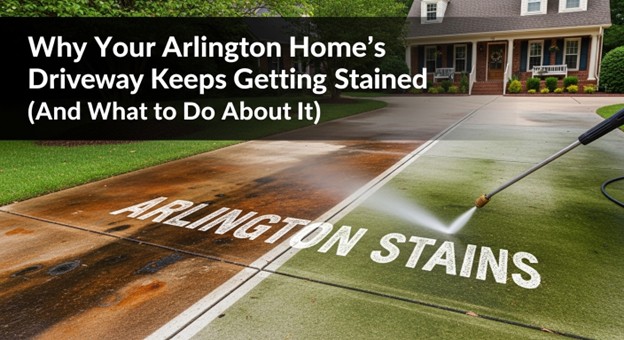
You had your driveway cleaned — or you scrubbed it yourself — and within a year or two it looks just as bad as before. The dark stains are back, the green is growing along the edges again, and it seems like no amount of effort keeps it looking clean for long. Sound familiar?
This is one of the most common frustrations we hear from Arlington homeowners, and there’s a specific reason it happens. Understanding it helps you approach driveway maintenance in a way that actually works.
The Root Cause: Concrete Is Extremely Porous
Concrete looks solid, but at a microscopic level it’s full of tiny pores and capillaries — millions of them across your driveway’s surface. These pores absorb everything that contacts the surface: oil from vehicles, water carrying minerals and organic matter, algae spores, tannins from leaves, iron from soil and mulch runoff.
Once these contaminants are in the pores, they’re not on the surface anymore — they’re in the material. Surface cleaning that doesn’t reach into those pores doesn’t actually remove the staining. It just cleans the top layer, leaving the absorbed contaminants to wick back to the surface within weeks or months.
This is why your driveway looked clean for a month after you scrubbed it, then slowly went back to looking stained. The staining was never fully removed — it was just temporarily obscured.
The Main Culprits Behind Repeat Staining in Arlington
Vehicle fluids. Motor oil, transmission fluid, brake fluid, and power steering fluid all drip from vehicles over time — especially older cars and trucks. Each drop that hits your driveway starts penetrating the pores immediately. Fresh spots are containable; years of accumulated drips become deeply embedded staining.
Algae and biological growth. Arlington’s climate — warm, periodically humid, with plenty of organic material from trees and landscaping nearby — creates ideal conditions for algae and mildew to grow on concrete. You’re most likely to see this along the edges of your driveway near grass or mulch, and in any shaded areas where the concrete stays damp longer.
Tannin and leaf staining. Oak trees are everywhere in Arlington, and their leaves and acorns leave behind tannin staining — dark brown or black marks that look like rust or oil but are purely organic. This type of staining is often mistaken for something more serious, but it responds well to professional cleaning.
Iron and rust staining. If you have mulch, certain soil types, or irrigation water with high iron content, you may see orange-red staining develop on your concrete over time. Iron staining is one of the harder types to remove and benefits from specific treatment chemistry.
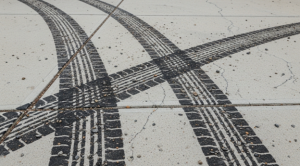
Road runoff and tire rubber. Every vehicle that turns into your driveway deposits small amounts of rubber and road contaminants. Combined with rain runoff carrying road materials, this creates general darkening that accumulates year after year.
Why Standard Cleaning Doesn’t Last
Most homeowners who try to clean their own driveways use one of a few approaches: a standard pressure washer from a rental center, a commercial cleaner from a hardware store, or a garden hose and scrub brush.
These approaches have real limitations for concrete cleaning.
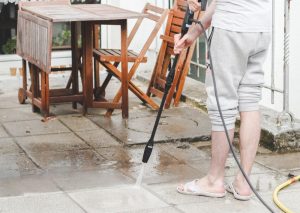
A standard consumer or rental pressure washer operates at adequate pressure for surface cleaning but typically lacks the water volume (gallons per minute) to truly flush contaminants out of the pores. The result looks clean immediately after but re-stains quickly because the embedded contaminants are still there.
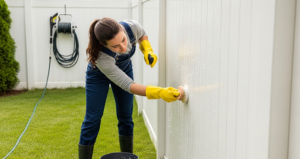
Consumer cleaning products are generally formulated for surface cleaning, not for penetrating porous concrete and emulsifying deeply absorbed oil. They clean what’s on the surface but can’t reach what’s in the material.
What Professional Cleaning Does Differently
Professional concrete cleaning for heavily stained driveways uses an approach that actually addresses the porosity problem.
Degreaser pre-treatment. Professional-grade degreasers are specifically formulated to penetrate concrete pores and break down oil and organic matter at a chemical level. They’re applied to stained areas and given dwell time before washing — allowing the chemistry to emulsify contaminants and bring them toward the surface.
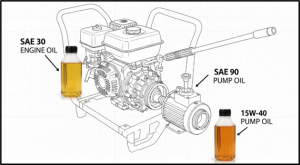
High-volume hot water washing. Commercial pressure washing equipment operates at higher water volumes and temperatures than consumer equipment. Hot water activates the degreaser more aggressively and flushes the emulsified contaminants out of the pores more completely.
Rotary surface cleaner. A professional surface cleaner attachment spins dual nozzles across the concrete surface, delivering uniform cleaning without the tiger-striping that a single open wand creates. Every square foot gets equal treatment, resulting in an even, streak-free clean across the entire driveway.
The result of this process lasts significantly longer than consumer cleaning because it actually removes contamination from within the concrete, not just from the top of it.
How to Keep Your Driveway Looking Clean Longer
Beyond professional cleaning, a few things make a real difference in how long your driveway stays looking good.
Address oil spills immediately. A fresh oil drip that’s absorbed into the pores for 15 minutes is far easier to treat than one that’s been sitting for a week. Keep an absorbent material — cat litter, oil-dry, or baking soda — on hand and apply it to any fresh spills before they penetrate deeply.
Seal the concrete after cleaning. Concrete sealer is one of the best investments you can make for a driveway you want to keep clean. It fills the surface pores, dramatically reducing the concrete’s absorbency. Oil drips, leaf staining, and biological growth have a much harder time penetrating sealed concrete — and when they do accumulate on the surface, they’re far easier to clean off.
Keep mulch and soil back from the driveway edge. The area where mulch or soil meets your concrete is where algae and tannin staining starts. A small gap or border between organic landscaping material and your concrete surface slows this process.
Schedule regular professional cleanings. Annual or biennial professional cleaning prevents the layering effect where years of contaminants build on top of each other and become progressively harder to remove. Keeping ahead of the buildup makes each cleaning faster, cheaper, and more effective.
When to Call a Professional
If your driveway has significant oil staining, years of accumulated buildup, or tannin and rust staining that consumer products can’t touch, professional cleaning is the practical solution. You’ll get results that aren’t achievable with consumer equipment, results that last longer, and an honest assessment of what’s achievable with very old or set-in staining.
Tired of watching your Arlington driveway go right back to looking stained?
Stegmeier Pressure Washing provides professional driveway cleaning with degreaser pre-treatment throughout Arlington, TX and the DFW area. Call or text (817) 773-8984 or request a free quote →. Let’s get your driveway clean and keep it that way.