Introduction: Why Roof Cleaning Costs More Than Most Homeowners Expect
Roof cleaning is often underestimated until black streaks, moss patches, or algae growth become visible from the street. At that point, homeowners start asking the most important question: how much does roof cleaning cost?
The answer is not fixed because roof cleaning is a highly technical pressure washing service that depends on roofing material, contamination level, height, and cleaning method. Unlike basic exterior washing, roof cleaning requires controlled pressure, chemical treatment, and safety-focused execution to avoid surface damage.
In this guide, we break down real pricing structures, professional methods, and what actually drives cost in the pressure washing industry.
Short Answer: How Much Does Roof Cleaning Cost?
On average, roof cleaning costs typically range:
- Low end: light maintenance cleaning on small roofs
- Mid range: standard residential roof soft washing
- High end: large, steep, or heavily stained roofs
Key pricing factors include:
- Roof size and square footage
- Roofing material type (shingles, tile, metal, slate)
- Level of algae, moss, or lichen buildup
- Cleaning method used (soft washing vs pressure washing)
Method impact:
Soft washing is generally more expensive but safer and more effective for roofing materials. Pressure washing is cheaper but rarely used directly on roofs due to risk of damage.
Residential vs commercial:
- Residential roofs are usually priced per job or square foot
- Commercial roofs are priced based on complexity and access requirements
Surface condition also plays a major role—heavy black streaks or moss buildup significantly increases labor time and chemical usage.
How Much Does Roof Cleaning Cost and What Affects the Price?
How Much Does Roof Cleaning Cost in Simple Terms?
Roof cleaning is typically priced in two ways:
- Per square foot pricing
- Flat-rate job pricing
For example:
- Asphalt shingle roofs are usually cheaper to clean
- Tile roofs cost more due to fragility and labor intensity
Steep roofs or heavily stained surfaces increase costs because technicians must work slower and apply more controlled cleaning techniques, especially when handled by professionals like Stegmeier Pressure Washing, where precision and safety standards significantly impact the overall service time and pricing.
Key Factors That Influence Roof Cleaning Cost
Several technical and environmental factors determine final pricing:
- Roof size and pitch (steeper = more labor risk)
- Roofing material type (shingle, tile, metal, slate)
- Biological growth severity (moss, algae, lichen)
- Building height and accessibility
- Cleaning method (soft wash vs pressure wash approach)
- Regional labor rates in pressure washing markets
Each factor directly impacts time, equipment use, and safety requirements.
Why Roof Cleaning Costs Vary by Method
Different methods change pricing significantly:
- Soft washing: chemical-heavy, low pressure, longer process
- Pressure washing: faster but limited roof application
- Hybrid systems: combine both methods for optimal results
Additional cost drivers include:
- Chemical dwell time requirements
- Equipment sophistication (low-pressure pumps vs standard washers)
- Technician skill level and risk management
What Is Roof Cleaning in Pressure Washing and How It Works
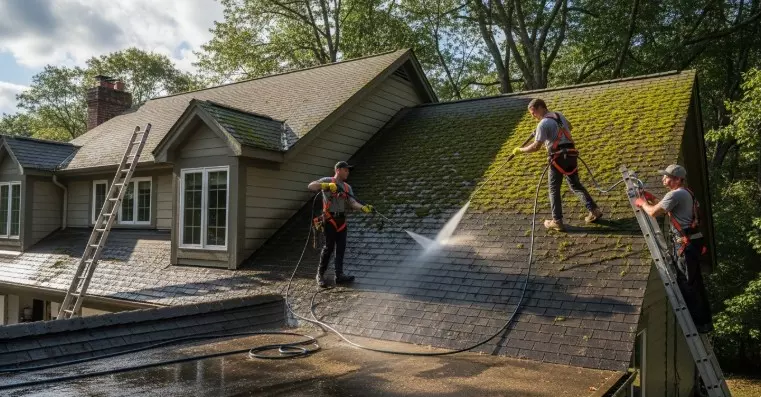
Roof cleaning in the pressure washing industry is a controlled exterior restoration process designed to remove algae, moss, dirt, and organic buildup without damaging roofing materials.
Key technical components include:
- PSI (Pressure per Square Inch): Roofs require very low PSI or none at all
- GPM (Gallons per Minute): Higher flow improves rinse efficiency
- Soft washing systems: Industry-standard for most residential roofs
Instead of blasting surfaces, professionals use specialized detergents that kill organic growth at the root level, ensuring longer-lasting results.
Where and When Pressure Washing Roof Cleaning Is Used
Roof cleaning is commonly applied in:
- Residential homes with asphalt shingles
- Tile, slate, and metal roofing systems
- Commercial flat roofing structures
- Properties with algae streaks or moss buildup
Best seasonal timing:
- Spring: removes winter buildup
- Fall: prepares roof before cold weather
This timing helps extend roof life and improve curb appeal before seasonal changes.
How Roof Cleaning Is Done Safely
Step 1: Roof Inspection and Surface Assessment
- Identify roofing material type
- Check for cracks, loose shingles, or weak areas
- Decide between soft wash or low-pressure method
Step 2: Preparing the Area
- Protect landscaping and gutters
- Cover electrical fixtures and sensitive areas
- Set up safe access points and stabilization systems
Step 3: Applying Cleaning Solution
- Apply soft wash solution evenly
- Allow dwell time for algae and moss breakdown
- Use correct dilution ratios for roof safety
Step 4: Low-Pressure Cleaning Process
- Rinse using controlled low-pressure systems
- Avoid direct high-pressure contact with roofing surface
- Ensure full and even coverage
Step 5: Final Rinse and Inspection
- Remove chemical residue and runoff
- Inspect for missed stains or growth
- Perform final cleanup and safety check
Roof Cleaning Methods and Equipment
| Method | Best Use | PSI Level | Safety for Roof | Cost Level | Effectiveness |
|---|---|---|---|---|---|
| Soft Washing | Shingles, tiles | Low | Very High | Medium | Very High |
| Pressure Washing | Hard surfaces only | High | Low (roof risk) | Medium | High |
| DIY Cleaning | Light maintenance | Variable | Medium-Low | Low | Moderate |
| Professional Service | Full roof restoration | Controlled | Very High | Higher | Very High |
Safety and Best Practices for Roof Cleaning
- Avoid high-pressure contact on roofing materials
- Maintain controlled PSI at all times
- Use eco-safe chemical treatments
- Secure ladder and fall protection systems
- Protect gutters and landscaping from runoff
- Avoid cleaning during storms or strong winds
Common Problems in Roof Cleaning Projects
Surface Damage from Incorrect Pressure Use
High pressure can strip shingle granules and weaken roofing layers.
Chemical Overuse or Incorrect Dilution
Incorrect mixing can cause discoloration or surface damage.
Poor Water Drainage Management
Improper runoff control may damage siding and gutters.
Incomplete Algae or Moss Removal
Without proper treatment, growth can return quickly.
Cost Factors for Roof Cleaning Services
- Roof size and total square footage
- Roofing material type and fragility
- Severity of algae, moss, or staining
- Roof height and access difficulty
- Equipment and chemical requirements
- Local market pricing and demand
Sub-Questions People Also Ask About Roof Cleaning Cost
How often should a roof be cleaned?
Typically every 1–3 years depending on environment.
Is roof cleaning worth the cost?
Yes, it extends roof lifespan and improves curb appeal.
Does roof cleaning damage shingles?
Not when soft washing is used correctly.
What is the cheapest way to clean a roof?
DIY low-pressure cleaning, but with higher risk.
Can roof cleaning increase home value?
Yes, it improves appearance and buyer perception.
How long does roof cleaning last?
Results usually last 1–3 years depending on climate.
Is pressure washing safe for roofs?
No, high-pressure washing is generally not recommended.
What is included in professional roof cleaning?
Inspection, chemical treatment, soft wash cleaning, and final rinse.
Best Practices for Roof Cleaning in Pressure Washing Industry
- Always inspect roof condition before cleaning
- Use soft washing for most residential roofs
- Maintain precise chemical dilution ratios
- Control pressure strictly during application
- Schedule regular maintenance cleaning
- Hire trained professionals for steep or complex roofs
FAQs About How Much Does Roof Cleaning Cost
How much does roof cleaning cost on average?
It varies widely depending on roof size, condition, and method used.
What affects roof cleaning pricing the most?
Roof size, material type, and contamination level.
Is soft washing more expensive than pressure washing?
Yes, but it is safer and more effective for roofs.
Can I clean my roof myself to save money?
Yes, but risk of damage is significantly higher.
How long does roof cleaning take?
Usually a few hours for residential homes.
Does roof cleaning include gutters?
Often included as an add-on service.
What is the safest roof cleaning method?
Soft washing is the safest industry standard.
Will roof cleaning remove black streaks completely?
Yes, when properly treated with correct chemicals.
Conclusion: Understanding Roof Cleaning Costs and Value
Roof cleaning costs depend on multiple technical and environmental factors, but the real value lies in protecting the roof itself. Proper cleaning not only removes algae, moss, and stains but also extends the lifespan of roofing materials.
The key takeaway is simple: choosing the right method matters more than choosing the cheapest price. Soft washing remains the safest and most effective approach, especially for residential roofs.
For homeowners, professional services deliver better long-term results, reduced risk, and improved property value compared to DIY methods—especially when dealing with steep or heavily contaminated roofs.