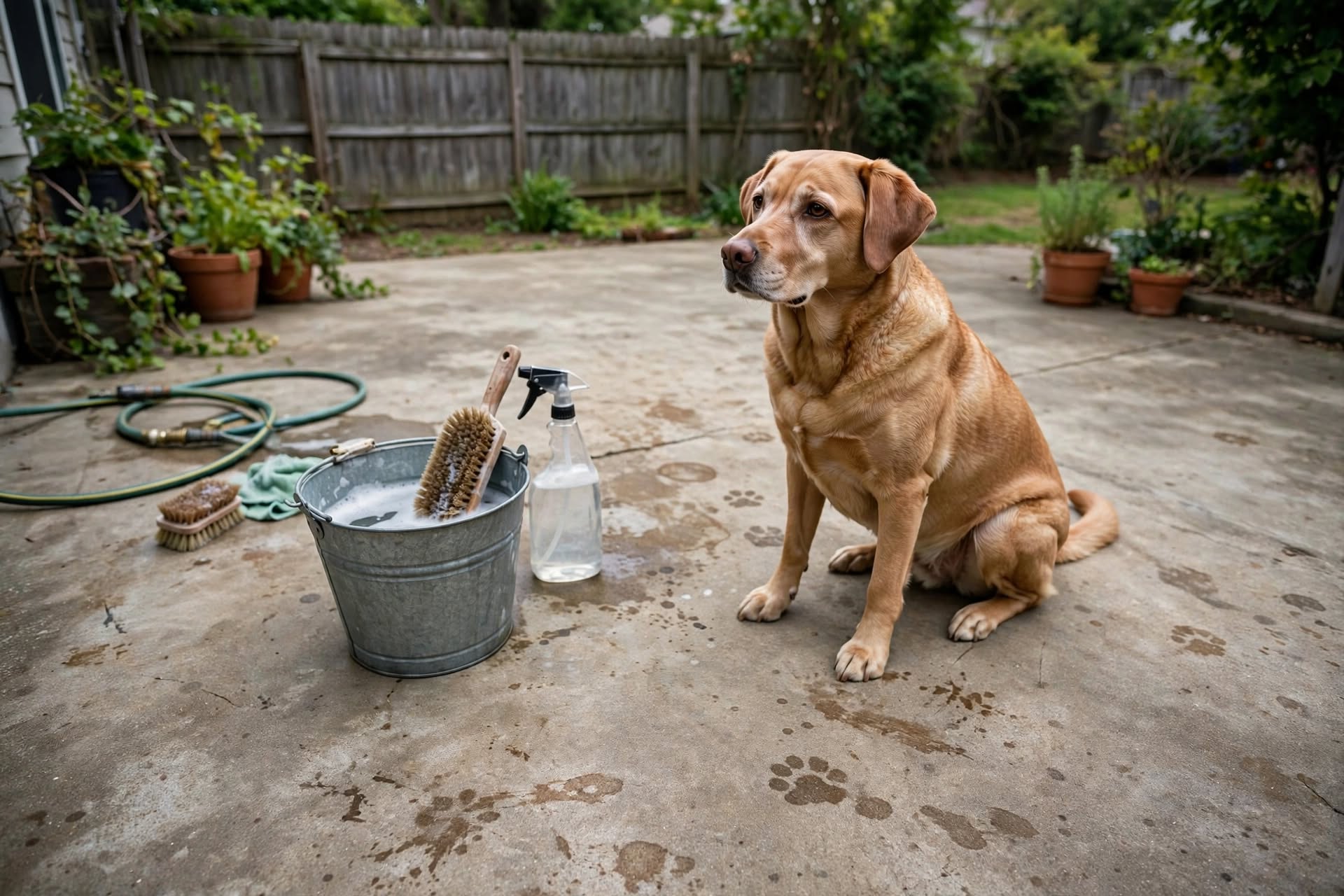
Anyone with a dog knows the smell that shows up on a patio or concrete slab after enough visits to the same spot. A quick rinse with the hose seems to help for a few minutes, but the smell almost always comes back, sometimes stronger than before, especially after rain or on a humid day. This isn’t a coincidence. Concrete holds onto pet urine in a way that plain water just can’t undo.
Knowing why rinsing fails makes it a lot easier to actually fix the problem instead of chasing it every week.
Why Concrete Holds Onto Pet Odor
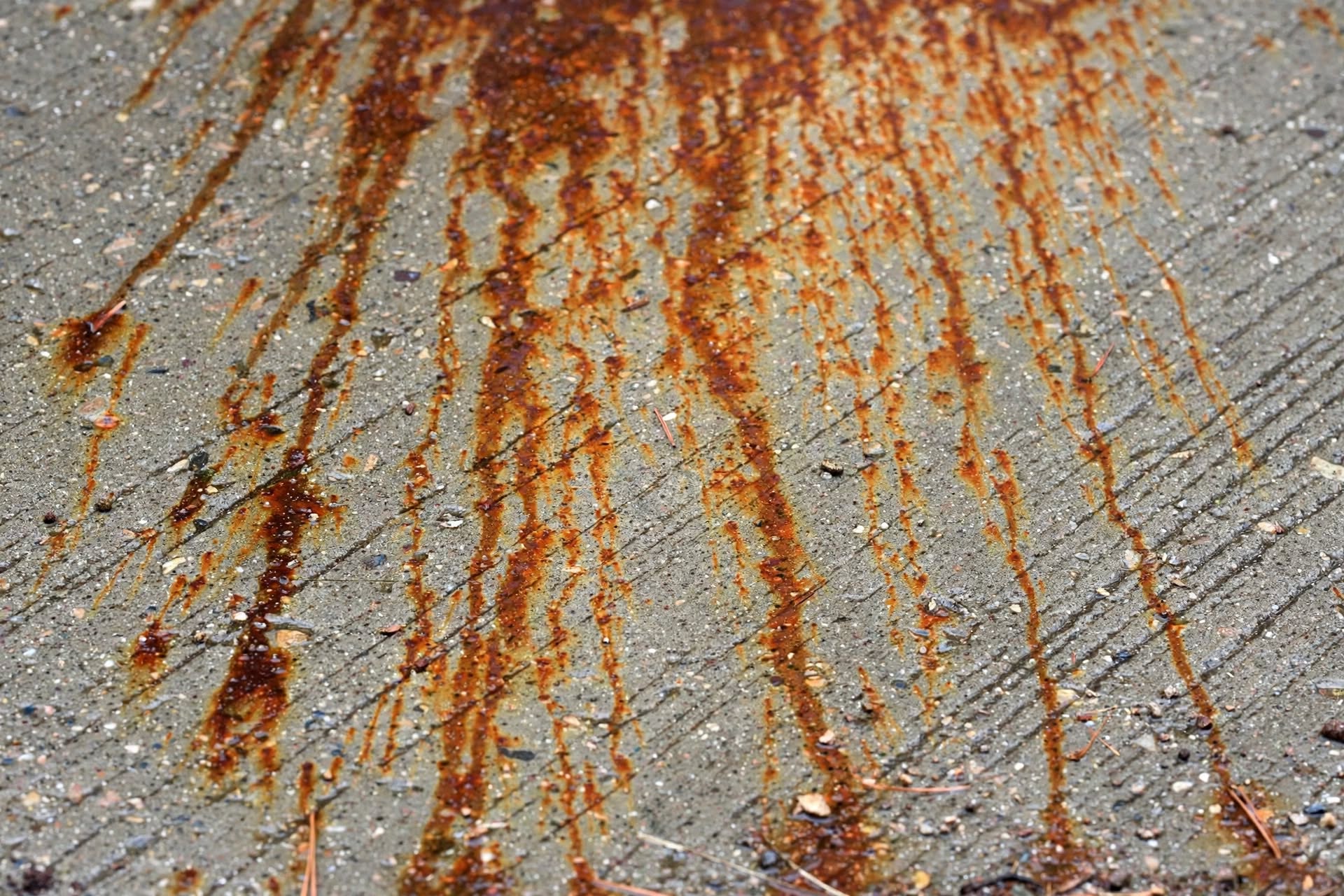
Concrete looks solid, but it’s actually porous, full of tiny gaps and channels that liquid can soak into. When a dog urinates on a patio or driveway repeatedly, that urine works its way below the surface, past the point where a hose or a bucket of soapy water can reach it.
Once urine gets into those pores, it doesn’t just sit there quietly. Bacteria start breaking it down, and that process releases the ammonia smell most people associate with pet odor. Heat and humidity speed this process up, which is part of why the smell often gets worse in the middle of a Texas summer.
Why the Smell Comes Back After Rain
A lot of homeowners notice the odor gets stronger right after it rains, and this makes sense once you see what’s happening underneath the surface. Moisture reactivates the bacteria living in the urine soaked pores of the concrete, releasing more of that ammonia smell into the air. The same thing happens with humidity, even without actual rainfall, since moisture in the air alone can be enough to trigger the smell.
Why Rinsing With Water Alone Doesn’t Work
Water sitting on top of concrete has no real way to reach urine that’s already soaked several layers deep into the surface. A rinse can wash away fresh urine before it has time to soak in, but once it’s had even a few hours to work its way into the pores, plain water just isn’t strong enough to pull it back out.
The Dilution Problem
Rinsing with water actually creates a secondary issue in some cases. Instead of removing the urine, it can spread the diluted liquid further into the surrounding concrete, expanding the area affected by odor rather than shrinking it. This is one of the main reasons a patio that gets rinsed regularly can still smell just as bad, or worse, than one that never gets touched at all.
Why Soap Alone Falls Short Too
Regular soap and water can lift some surface dirt and grime, but soap isn’t designed to break down the bacteria and ammonia compounds responsible for pet odor. It might mask the smell briefly with its own scent, but once that fades, the underlying odor usually returns within a day or two.
What Actually Removes Pet Odor From Concrete
Getting rid of pet odor properly takes a different approach than a standard cleaning, one that targets the bacteria and urine compounds directly rather than just moving water and soap across the surface.
Enzyme Based Cleaning Solutions
Enzyme cleaners work by breaking down the actual organic compounds in urine at a molecular level, rather than just diluting or masking them. This process removes the source of the smell instead of temporarily covering it up, which is why enzyme treatments tend to hold up much longer than a basic rinse or soap scrub.
Letting the Solution Soak In
For enzyme treatments to work properly, they need time to soak into the same pores the urine originally penetrated. A quick spray and immediate rinse doesn’t give the enzymes enough contact time to fully break down what’s underneath the surface, so patience during this step makes a real difference in the final result.
Pressure Washing to Finish the Job
After the enzyme solution has had time to work, pressure washing helps flush the broken down residue out of the concrete’s pores completely. This combination of enzyme treatment followed by pressure washing is typically what it takes to fully clear pet odor, rather than just reducing it for a short while.
Preventing Pet Odor From Building Back Up
A few habits can help keep pet odor from becoming a recurring problem after a proper cleaning.
Encourage pets to use a designated grass or gravel area instead of the same patch of concrete every time Rinse fresh urine spots quickly, within the first hour or so, before they have a chance to soak deep into the concrete Schedule periodic enzyme treatments in high traffic pet areas rather than waiting until the smell becomes noticeable again Keep concrete sealed if possible, since a sealed surface is far less porous and holds onto far less odor over time
Why DIY Treatments Often Fall Short
A lot of homeowners try store bought pet odor sprays or homemade vinegar mixes before calling for help, and while these can offer some relief on fresh, surface level spots, they rarely reach urine that’s already worked its way deep into concrete. Vinegar and baking soda mixes, popular for indoor pet stains, tend to have limited effect outdoors, since concrete pores are far deeper and more absorbent than fabric or carpet fibers.
Store bought enzyme sprays made for indoor use can help in a pinch, but they’re often diluted or formulated for smaller, lighter stains rather than months or years of repeated outdoor accidents in the same spot. Professional grade enzyme treatments, combined with proper pressure washing equipment, reach further into the concrete than most consumer products are designed to handle.
Getting a Patio Back to Smelling Clean
Pet odor on concrete is frustrating because it seems like it should be a simple fix, but the reality is that plain water and basic soap were never designed to handle what’s actually happening below the surface. Once the right enzyme treatment and pressure washing combination gets applied, a patio or driveway can go from a spot everyone avoids on hot days to a normal part of the yard again, without that lingering smell creeping back every time it rains.