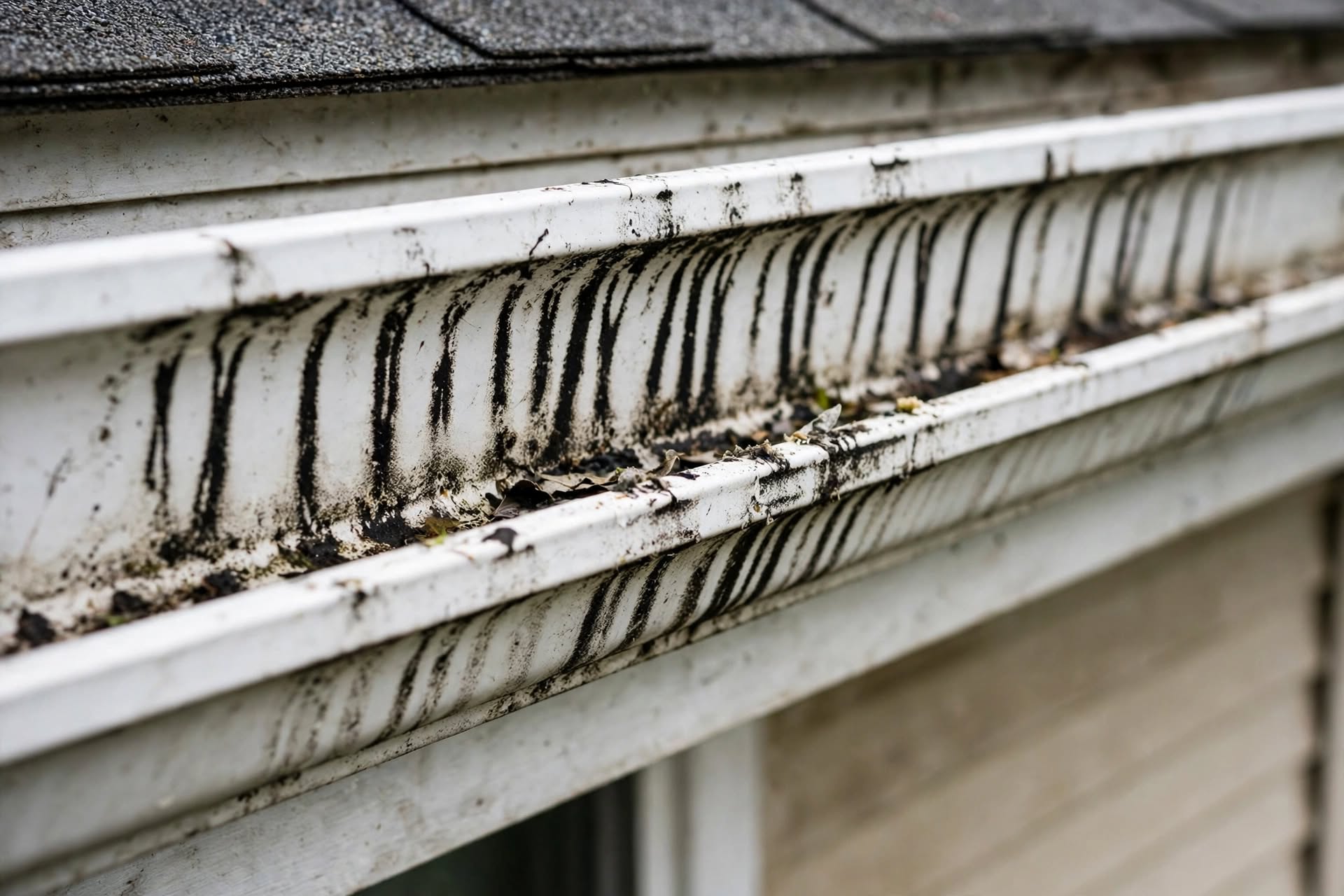
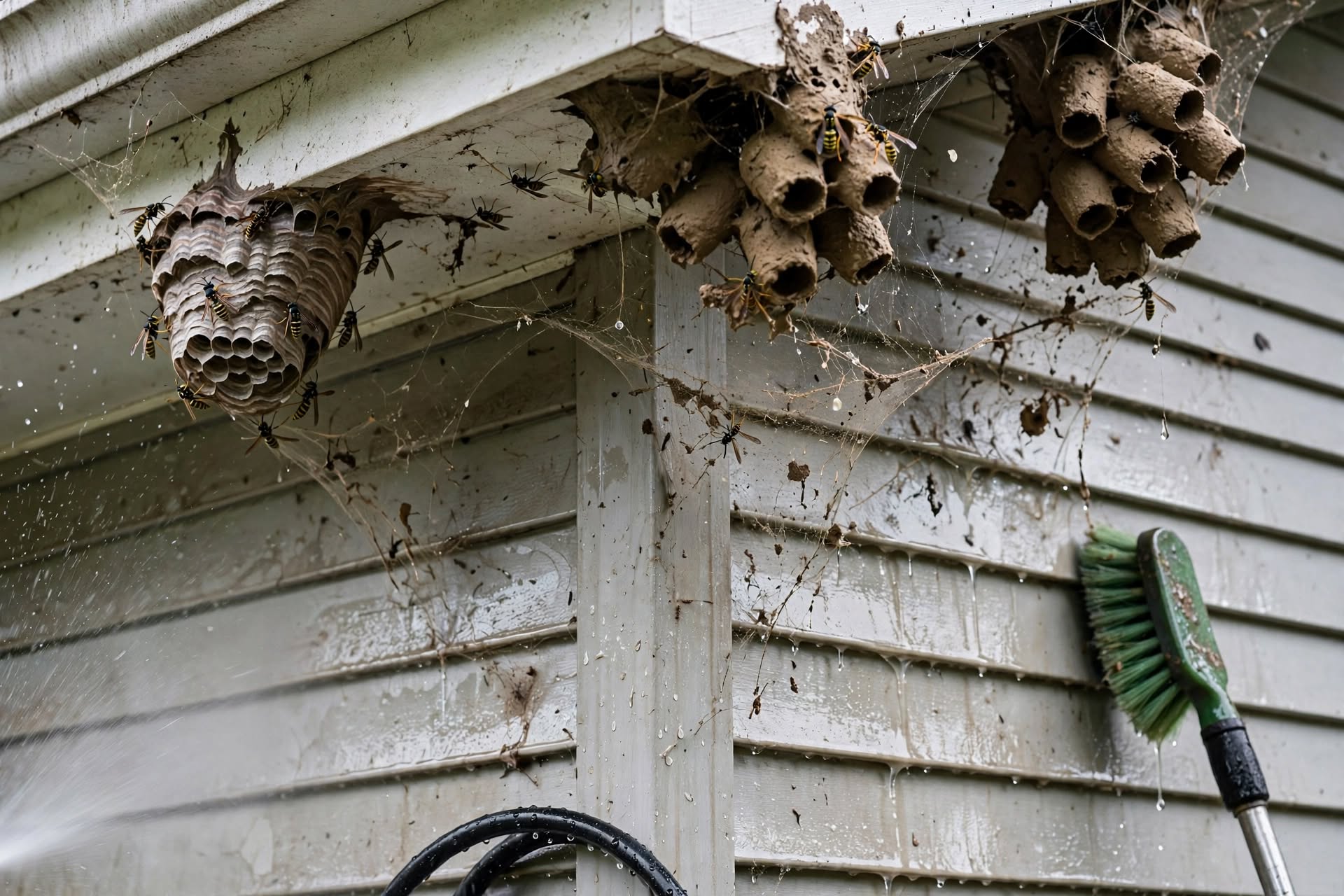
Most people book a house wash thinking about dirt, pollen, and mildew stains on their siding, but there’s another category of buildup that gets removed just as often, and it tends to surprise homeowners who weren’t expecting it. Mud dauber nests, active wasp nests, and spider webs collect on homes constantly in North Texas, tucked into corners, under eaves, and along window frames where nobody thinks to look until it’s already a problem.
A proper house wash clears all of this out along with the dirt and grime, and knowing what’s actually being removed helps explain why this service matters for more than just appearance.
Why Homes Attract These Pests in the First Place
Houses provide exactly what insects and spiders are looking for. Eaves, corners, and window frames offer shelter from wind and rain, and the exterior lighting most homes have near entryways attracts flying insects at night, which in turn attracts spiders looking for an easy meal.
Mud daubers specifically look for flat, protected surfaces to build their nests, and siding, brick, and stucco all work well for that purpose. Once a nest gets built, it tends to stay unless something actively removes it, since these structures are surprisingly durable once they’ve dried and hardened.
Mud Dauber Nests
Mud daubers build distinct tube nests out of mud, usually clustered together in groups along siding, under porch ceilings, or inside garages and sheds. Unlike wasps, mud daubers are largely non aggressive and rarely sting unless directly handled, but their nests still look unpleasant and tend to multiply if left alone season after season.
Wasp Nests
Actual wasp nests, built from a papery material that the wasps create by chewing wood fiber, show up in similar spots, often tucked under eaves, inside vents, or along the corners of covered porches. These nests present more of a real concern than mud dauber structures, since wasps can be aggressive, especially later in the season when nest populations grow larger.
Spider Webs & Egg Sacs
Spider webs collect fastest in corners, around window frames, and near outdoor lighting fixtures where insects gather at night. Beyond the webs themselves, egg sacs left behind can lead to a fresh population of spiders hatching directly on the exterior of a home if they’re never cleared away.
Why This Buildup Matters Beyond Appearance
Cobwebs and nests do more than make a home look neglected from the street. They can also point to a bigger pest presence than what’s immediately visible, since active nests attract more insects over time, which in turn attracts more spiders looking for prey near the same areas.
Safety Concerns With Active Wasp Nests
An active wasp nest near a front door, garage entrance, or frequently used walkway creates a real safety issue for anyone approaching the home, including kids, pets, and guests who might not notice the nest until it’s too late. Removing these nests as part of a routine house wash cuts down on this risk before it becomes a bigger problem.
Structural Buildup Over Time
Left alone for multiple seasons, mud dauber nests and wasp structures can build up significantly, especially in protected areas like covered porches or eaves that never see direct rain to help naturally break them down. What starts as a few small nests can turn into a much larger cluster if nothing ever removes them.
How a House Wash Handles Nests & Webs
A proper house wash doesn’t just target dirt and mildew on flat siding surfaces. It also reaches into the corners, eaves, and window frames where these nests and webs tend to collect.
Soft Washing Reaches Where a Simple Rinse Can’t
Soft washing uses a cleaning solution combined with controlled pressure that reaches into gaps, corners, and protected areas a basic garden hose rinse would miss entirely. This process breaks down and removes dried mud nests, old wasp structures, and webbing along with the dirt and grime covering the rest of the siding.
Clearing Egg Sacs & Preventing Immediate Return
Beyond removing visible nests and webs, a thorough house wash also clears away egg sacs and residual material that could otherwise lead to a new generation of spiders or insects moving back into the same spots shortly after cleaning.
Addressing Areas Homeowners Often Miss
Corners near rooflines, the underside of eaves, and window frame edges are some of the most common spots for nests and webs to build up, and they’re also some of the hardest areas for homeowners to reach and clean on their own without proper equipment. A full house wash covers these areas as a standard part of the service, rather than treating them as a separate task.
Keeping Nests & Webs From Building Back Up
A few habits help slow down how quickly new nests and webs form after a cleaning.
Switch outdoor lighting to bulbs less attractive to flying insects, which cuts down on the spiders drawn in to feed on them Check eaves, corners, and window frames periodically between full house washes for any early signs of new nest activity Keep landscaping trimmed back from the house, since dense plants near siding give insects and spiders more cover close to the home Schedule regular house washing on a seasonal basis rather than waiting until nests have had months to build up
A Cleaner Home Inside & Out
A house wash covers a lot more ground than most people expect going in. Beyond restoring color and clearing away mildew and pollen, it also removes the mud dauber nests, wasp structures, and spider webs that quietly build up in corners and under eaves throughout the year. Clearing all of this out at once leaves a home looking cleaner and reduces the pest activity that tends to creep back in the longer these areas go untouched.