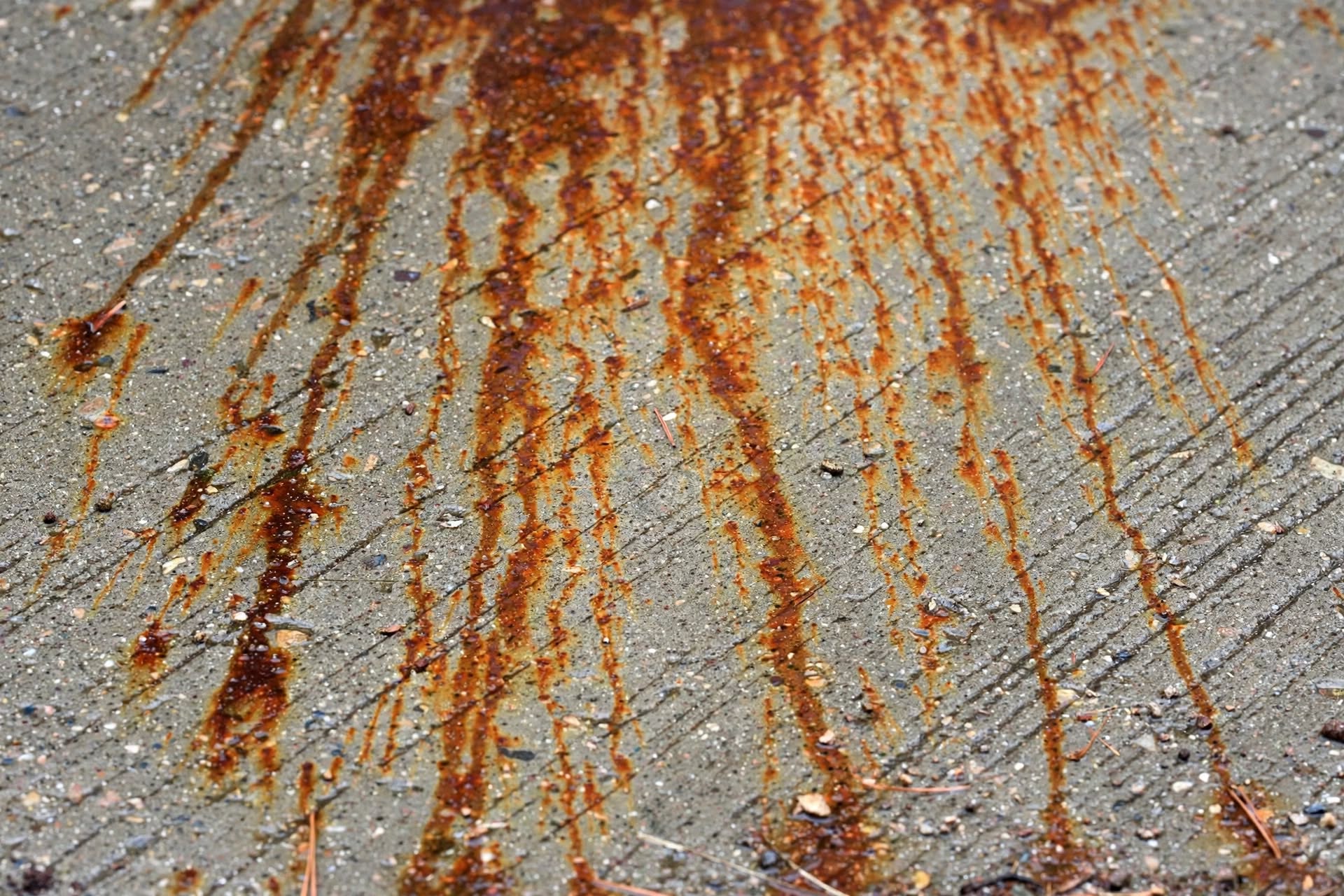
Orange stains on a driveway, patio, or sidewalk are one of the more frustrating things a homeowner can find, mostly because they don’t wash away with a hose the way dirt or mud does. These stains come from rust, and once iron oxide sets into concrete, regular cleaning usually isn’t enough to get it back out.
Knowing where these stains come from makes it a lot easier to figure out how to remove them and how to keep new ones from showing up.
What Causes Rust Stains on Concrete
Rust stains form when iron comes into contact with concrete and starts to oxidize, leaving behind that familiar orange or reddish brown mark. A few common sources tend to be behind most of the rust stains homeowners deal with.
Sprinkler Systems & Well Water
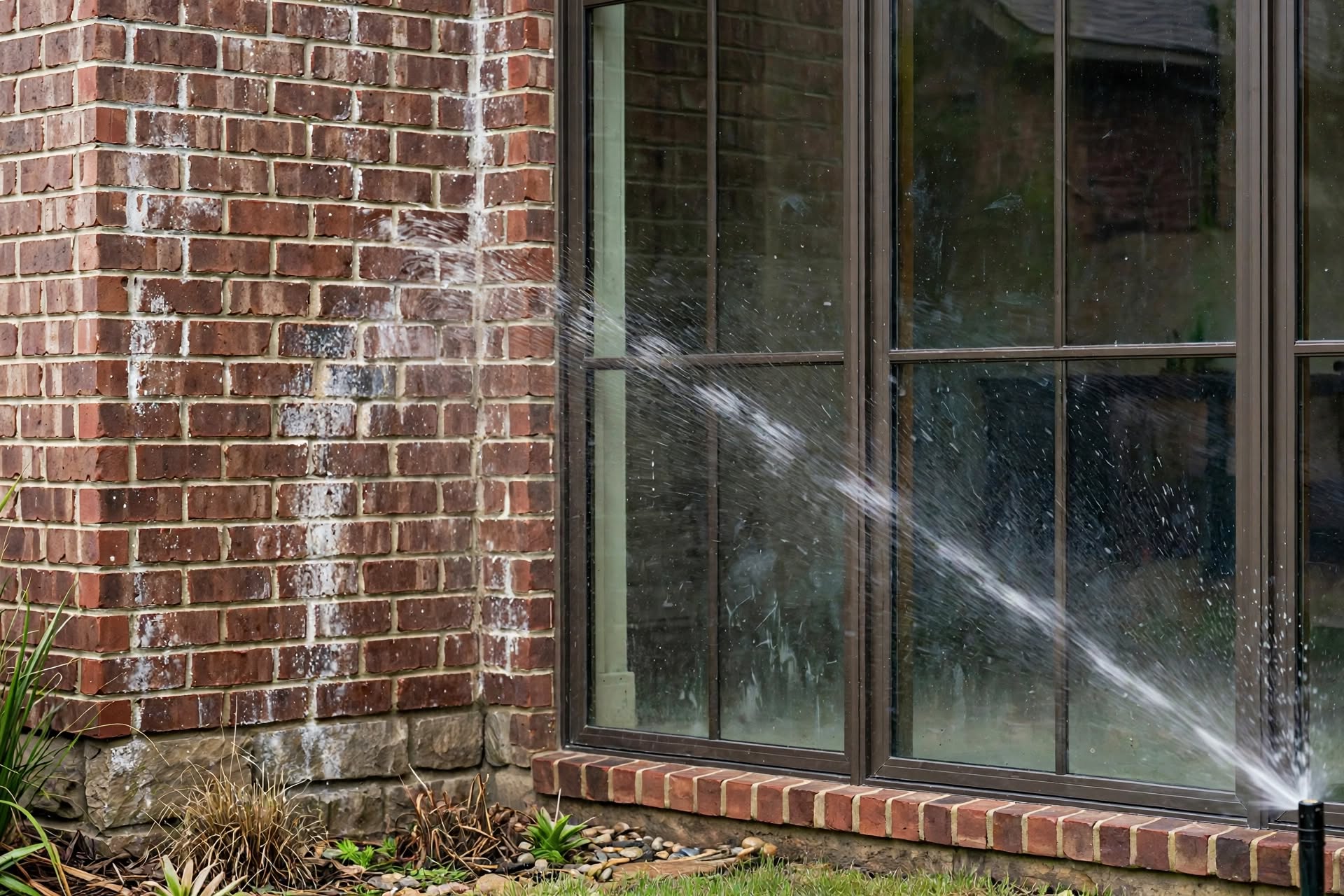
Sprinkler systems pulling from well water or groundwater high in iron content are one of the most common causes of rust staining on driveways and walkways. Every time the sprinklers run, they deposit trace amounts of iron onto the concrete, and over weeks and months, that iron oxidizes and builds into a visible stain.
This is especially common in areas with older irrigation systems or homes relying on well water rather than city water, since municipal water typically has lower iron content than groundwater sources.
Metal Furniture & Fixtures
Metal patio furniture, planters, and fixtures left in one spot for a long stretch can leave rust rings on concrete underneath them, especially after rain or when moisture collects around the base. Even galvanized metal can eventually rust if the coating wears down over time, leaving behind the same kind of orange staining.
Rebar & Structural Metal
Sometimes rust stains come from inside the concrete itself. Rebar used to reinforce concrete slabs can rust if moisture reaches it through cracks or porous areas, and that rust can work its way to the surface, creating staining that seems to come from nowhere.
Fertilizer With Iron Content
Certain lawn fertilizers contain iron to help green up grass, and if that fertilizer lands on a driveway or walkway during application, it can leave behind rust colored spots once it reacts with moisture and sits for a while.
Why Rust Stains Are Hard to Remove
Unlike surface dirt, rust actually bonds with the concrete at a chemical level. Concrete is porous, and once iron oxide works its way into those pores, it becomes part of the surface rather than sitting on top of it. This is why soap, water, and even standard pressure washing often leave rust stains mostly untouched.
Why Standard Cleaners Don’t Work
General purpose cleaners are built to lift dirt, oil, and organic buildup, not oxidized metal. Using a regular cleaner on a rust stain usually just wastes time and product, since the chemical makeup of most standard cleaning solutions has no real effect on iron oxide once it’s bonded to the concrete.
What to Look For Before Starting a Cleaning
A few checks before treating a rust stain can help avoid wasted effort or accidental damage to the concrete.
Confirm the source of the staining first, since a stain caused by an active sprinkler head will keep returning until the sprinkler itself gets adjusted or repaired, no matter how many times the concrete gets treated.
Test any rust removing solution on a small, hidden section of concrete first, since some concrete mixes or sealants react differently to certain chemical treatments than others.
Check the depth and age of the stain before deciding how many treatments to plan for, since older, deeply set staining almost always takes longer to fully clear than a stain that formed recently.
How to Properly Remove Rust Stains
Getting rust out of concrete takes a cleaning approach built specifically for oxidized metal, rather than a general degreaser or all purpose cleaner.
Rust Specific Cleaning Solutions
Cleaning products formulated specifically to break down iron oxide use a different chemical process than standard cleaners, targeting the bond between the rust and the concrete rather than just lifting surface debris. These solutions need time to work into the stain before rinsing, since a quick spray and rinse usually isn’t enough to break that bond completely.
Letting the Solution Dwell
Rust removers typically need a dwell time of several minutes up to an hour, depending on how deep the staining has set into the concrete. Older, more established stains often need a longer dwell time or a repeat application to fully lift out of the surface.
Pressure Washing After Treatment
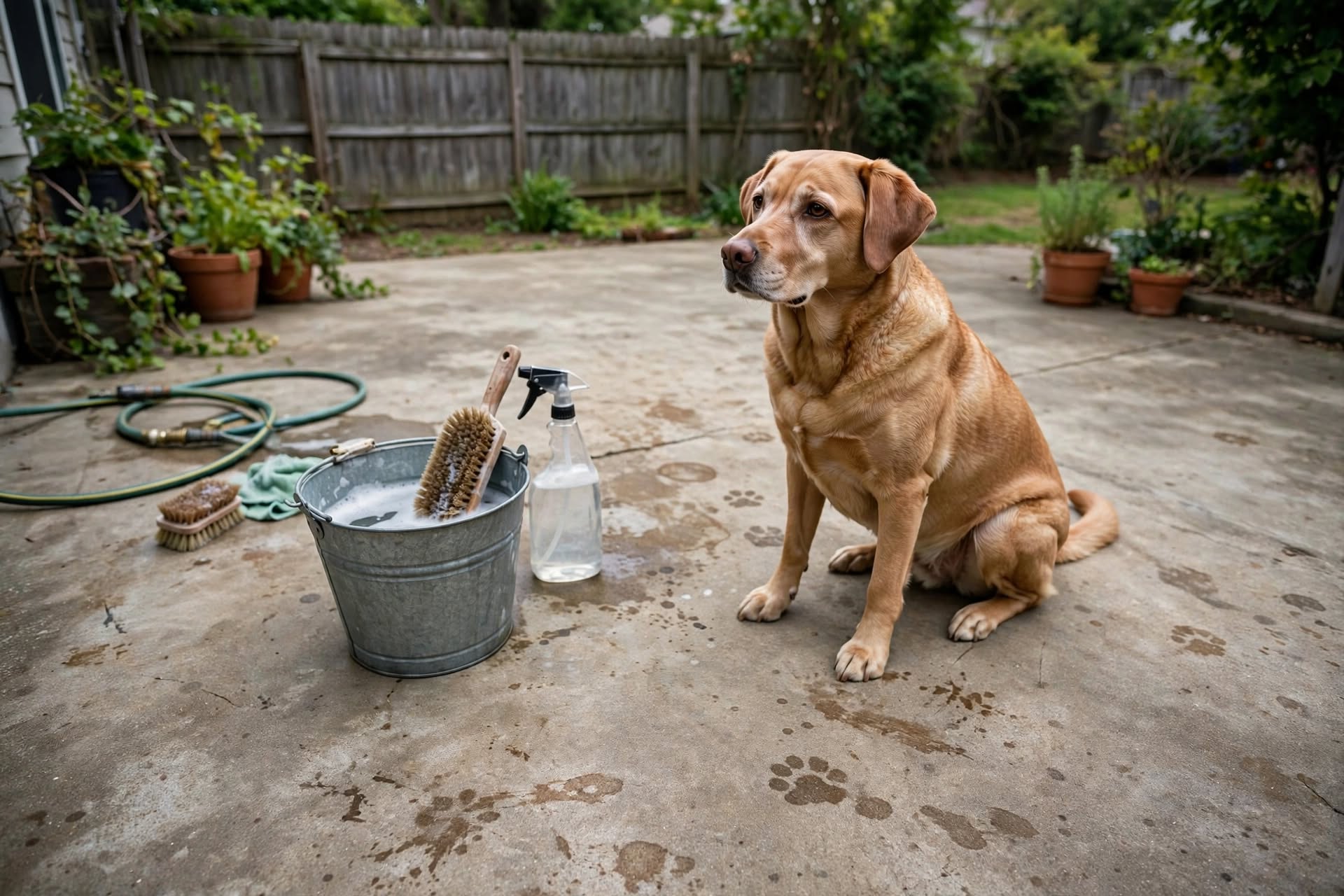
Once the rust removing solution has had time to break down the staining, pressure washing helps flush the loosened rust out of the concrete’s pores. This combination of chemical treatment followed by pressure washing is typically what it takes to fully remove a rust stain, rather than just lightening its appearance.
Multiple Treatments for Deep Staining
Stains that have been sitting for months or years sometimes need more than one round of treatment, since deeply set iron oxide doesn’t always lift completely on the first pass. Patience matters here, since repeated light treatments are usually more effective than one aggressive attempt that risks damaging the concrete surface.
Preventing Rust Stains From Coming Back
A few steps can help prevent new rust staining after an area has been properly cleaned.
Adjust sprinkler heads so they don’t spray directly onto concrete surfaces Use rust resistant feet or coasters under metal furniture and planters Address any visible rebar exposure or cracks that could let moisture reach structural metal Sweep up any spilled fertilizer immediately, rather than letting it sit on concrete
Getting Concrete Looking Clean Again
Rust stains are stubborn, but they’re not permanent once the right cleaning process gets applied. No matter the source of the iron, a sprinkler system, old furniture, or fertilizer overspray, most rust staining on concrete can be fully lifted with the right combination of chemical treatment and pressure washing. Taking a few preventive steps afterward keeps a driveway or patio looking clean well after the original stains are gone.